10 Kids Rooms Inspo Ideas

•

Designing a kids’ room is an exercise in balancing functionality with imagination. A child’s space needs to be a multifunctional environment that grows with them—serving as a playground by day, a study zone for school, and a peaceful sanctuary for rest. Modern children’s room design has moved away from loud, theme-heavy decor toward sophisticated, flexible spaces that incorporate natural textures, intelligent storage, and playful elements that can be easily updated as your child’s interests evolve.

Here are 10 inspiring ideas to create a bedroom that is as practical as it is magical.

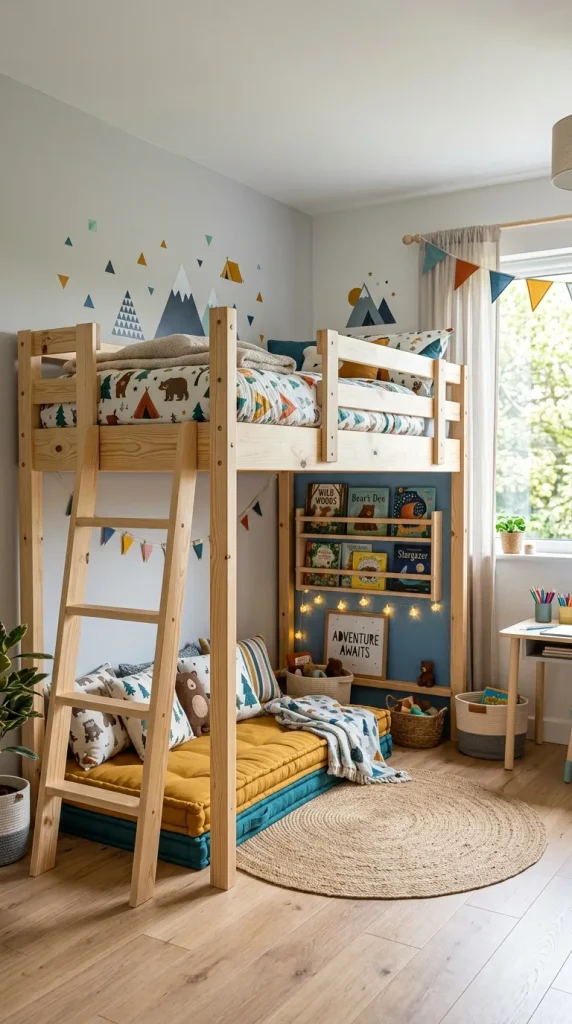
1. The “Adventure Peak” Loft Bed

A loft bed is the ultimate space-saving solution for smaller bedrooms. By elevating the mattress, you create an entire “hidden” room underneath that can serve as a reading nook, a fort, or a dedicated homework station. This design maximizes vertical space, turning the bed into an architectural feature that feels like a private clubhouse.

  • Design Tip: Add a soft, floor-cushion-filled rug underneath to transform the bottom area into a cozy retreat.
2. The Nature-Inspired Biophilic Haven

Bring the outside in with an organic, nature-inspired palette. Use soft sage greens, earthy terracottas, and natural wood furniture. Incorporate elements like a tree-branch coat rack, forest-themed wall murals, or a hanging macramé swing. This aesthetic is calming, timeless, and perfect for creating a serene environment that encourages a love for the outdoors.

  • Design Tip: Use warm-toned, dimmable ambient lighting to mimic the soft glow of a forest at dusk.

3. The Interactive Gallery Wall

Instead of a single piece of art, turn an entire wall into an interactive display. Use large-scale cork panels, magnetic chalkboard paint, or a grid of easy-access picture ledges. This allows your child to curate their own space by pinning up school projects, artwork, and photos, giving them a sense of ownership and creative agency over their room.

  • Design Tip: Frame their best drawings in uniform, inexpensive frames to make the wall feel like a curated professional gallery.

4. The Calm “Zen” Minimalist Nook

Sometimes the best design is the one that removes visual clutter. A minimalist room features low-profile furniture, plenty of hidden “closed” storage, and a strictly neutral color palette of cream, white, and soft grey. This “Zen” approach creates a quiet, focused environment that is perfect for kids who need a calm space to wind down after a busy day at school.

  • Design Tip: Use modular storage bins that tuck away into built-in cabinetry to keep the floors completely clear.

5. The “Shared Story” Bunk Room

For siblings sharing a room, a bunk setup can be an opportunity for intentional design. Opt for a custom “built-in” bunk look where each bed has its own dedicated reading light, small shelf, and privacy curtain. This gives each child a sense of personal territory and “privacy” within a shared space, making bedtime feel like a cozy, individualized experience.

  • Design Tip: Use contrasting but complementary colors for the bedding to give each child a distinct visual identity.

6. The “Creative Workshop” Studio

If your child is an artist or a builder, turn the room into a studio. This includes a large, washable workspace, wall-mounted storage for supplies, and accessible open shelving. A “workshop” room encourages hands-on learning and creativity, with wipeable surfaces and durable materials that aren’t afraid of a little mess.

  • Design Tip: Use a rolling trolley for art supplies so the “workshop” can move around the room as needed.

7. The Whimsical “Starry Night” Ceiling

Turn the ceiling into a canvas. Whether through hand-painted stars, a high-end wallpaper mural of the night sky, or strategically placed fiber-optic ceiling lights, a starry ceiling creates a sense of wonder. It’s an enchanting, subtle design detail that is only fully appreciated at bedtime, turning the room into a magical escape.

  • Design Tip: Pair the starry ceiling with warm-toned, soft-glow string lights along the perimeter to add dimension.

8. The “Reading Tent” Corner

Every child’s room needs a dedicated “slow” space. Create a cozy corner using a simple teepee, a suspended fabric canopy, or a floor-level built-in bookshelf. By filling this space with plush pillows and a soft, shaggy rug, you create an irresistible invitation to read, dream, or play quietly, away from the digital distractions of the rest of the house.

  • Design Tip: Install a small, targeted LED wall sconce inside the tent for the perfect nighttime reading light.

9. The “Growth-Ready” Modularity

Invest in furniture that evolves. A toddler’s daybed can be converted into a desk area, or a dresser can become a nightstand as the child grows. Choose a design style that is “age-neutral”—think modern Scandinavian lines or simple, high-quality wood furniture—rather than character-based themes that the child will quickly outgrow.

  • Design Tip: Use temporary, removable wall decals for themes so you can easily update the room as their interests change.

10. The Soft-Texture Sensory Haven

Focus on the “feel” of the room. Incorporate varying textures like velvet throw pillows, wool-blend blankets, shaggy rugs, and cotton curtains. A sensory-rich room feels more comfortable and luxurious, providing a grounding effect that is particularly helpful for children who respond well to soft, tactile environments.

  • Design Tip: Layer different shades of the same color palette to keep the textures interesting without making the room feel busy.

•

Leave a Reply

Your email address will not be published. Required fields are marked *