Another important aspect is reducing sensory overload. Clutter, harsh lighting, and loud environments can make it difficult to relax. A well-designed sensory bedroom minimizes distractions and introduces calming elements such as soft textures, gentle lighting, and organized layouts. This is especially beneficial for individuals with sensory processing needs, anxiety, or sleep difficulties.
From a Pinterest perspective, sensory bedrooms are highly “save-worthy” because they combine aesthetics with functionality. Soft color palettes, cozy textures, and creative lighting setups make these spaces visually appealing while also serving a meaningful purpose. The layered design—combining visual, tactile, and ambient elements—creates a cozy and inviting atmosphere that people are drawn to.
The best part is that creating a sensory bedroom doesn’t require a complete renovation. Small changes—like adding a weighted blanket, using blackout curtains, or incorporating calming scents—can make a big difference. With thoughtful planning and the right elements, you can transform any bedroom into a relaxing sensory retreat.
In this guide, you’ll discover 10 detailed sensory bedroom ideas that are practical, beginner-friendly, and designed to inspire. Each idea includes a clear explanation, step-by-step instructions, and a list of materials so you can easily recreate the look. Whether you want a calming sanctuary or a space that supports sensory needs, these ideas will help you design a bedroom that feels peaceful, comfortable, and perfectly tailored to you.
Let’s explore these sensory bedroom ideas and create a space that truly supports relaxation and well-being.
1. Soft Lighting Sensory Bedroom
Introduction (200 words)
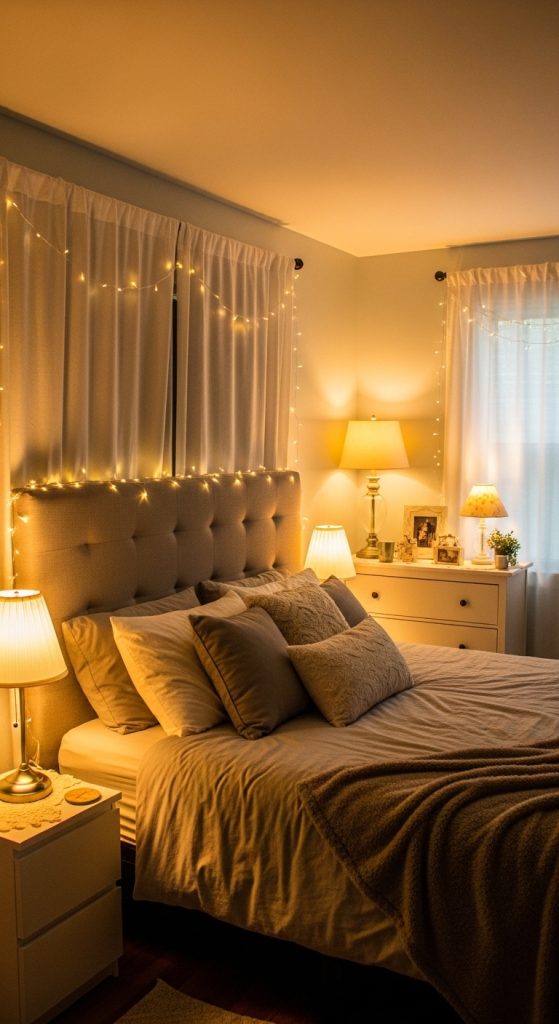
Lighting plays a crucial role in creating a sensory-friendly bedroom. Harsh overhead lights can feel overwhelming and disrupt relaxation, while soft, warm lighting helps create a calming atmosphere. A soft lighting sensory bedroom focuses on using gentle light sources that reduce strain on the eyes and promote a peaceful mood.
This idea is perfect for anyone who wants to unwind easily at night or create a cozy environment for reading, resting, or meditation. By layering different types of lighting—such as lamps, fairy lights, and LED strips—you can control the brightness and create a soothing ambiance that adapts to your needs.
What This Idea Means
Using soft, warm, and adjustable lighting to create a calming and sensory-friendly environment.
How to Create It
- Replace harsh overhead lights with warm bulbs
- Add bedside lamps with soft shades
- Use fairy lights or LED strips for ambiance
- Install dimmers for adjustable brightness
- Keep lighting low and relaxing
Materials Needed
- Warm light bulbs
- Lamps
- Fairy lights
- LED strips
2. Cozy Texture Sensory Bedroom
Introduction (200 words)
Textures are essential in sensory design. A cozy texture sensory bedroom focuses on soft, comforting materials that provide a sense of warmth and security.