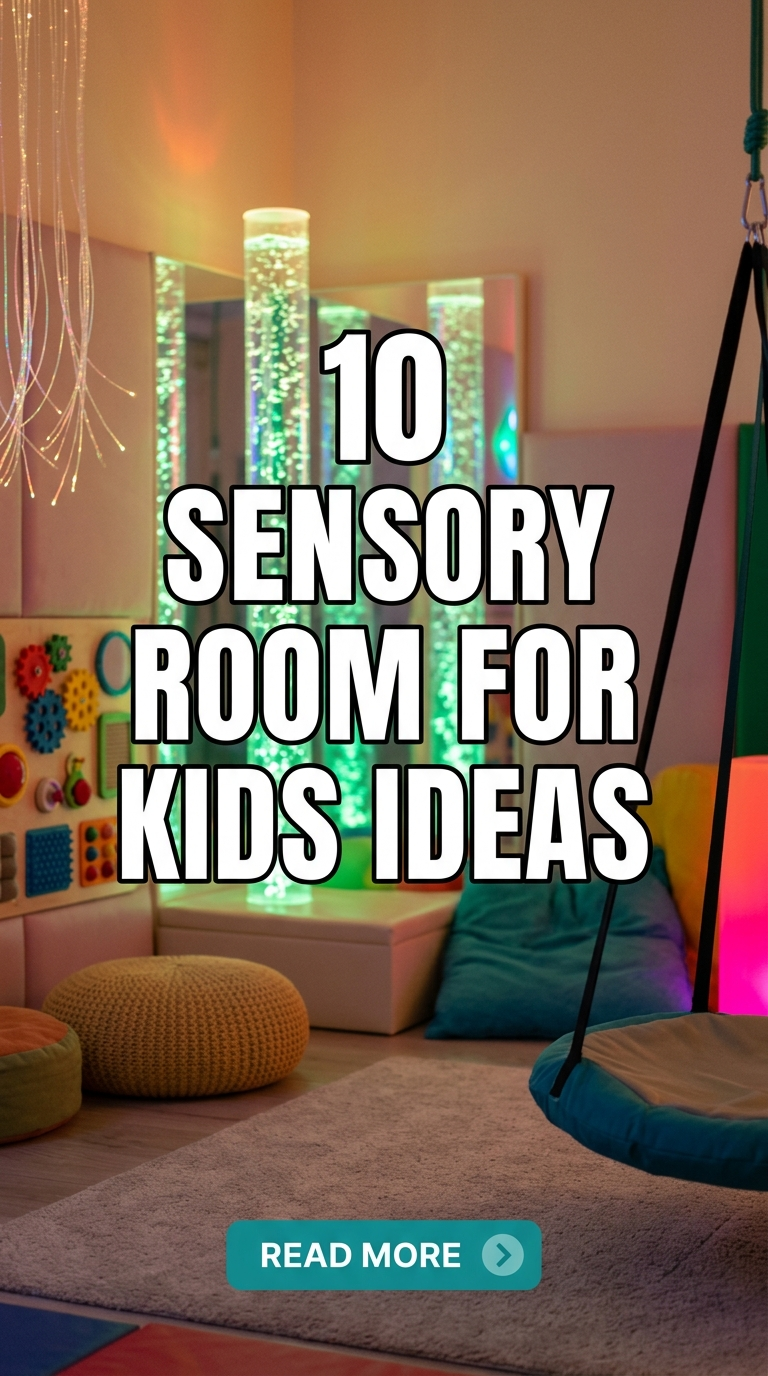
A sensory room is a special space designed to help kids feel calm, focused, and safe while also supporting their learning and development. These 10 Sensory Room For Kids Ideas are perfect for creating an environment that stimulates the senses in a gentle and controlled way.
Whether a child needs help with focus, relaxation, emotional regulation, or simply a fun place to play, a sensory room can make a big difference. The best part about these 10 Sensory Room For Kids Ideas is that they are simple, affordable, and can be set up at home or in a classroom.
Sensory rooms use light, sound, touch, and movement to create a balanced experience. Some rooms feel calm and soothing, while others are more active and playful. In this guide, you’ll learn how to design both types easily using everyday items and creative setups.
Let’s explore these ideas and build a space where kids can learn, relax, and grow happily.
1. Soft Calming Light Sensory Room
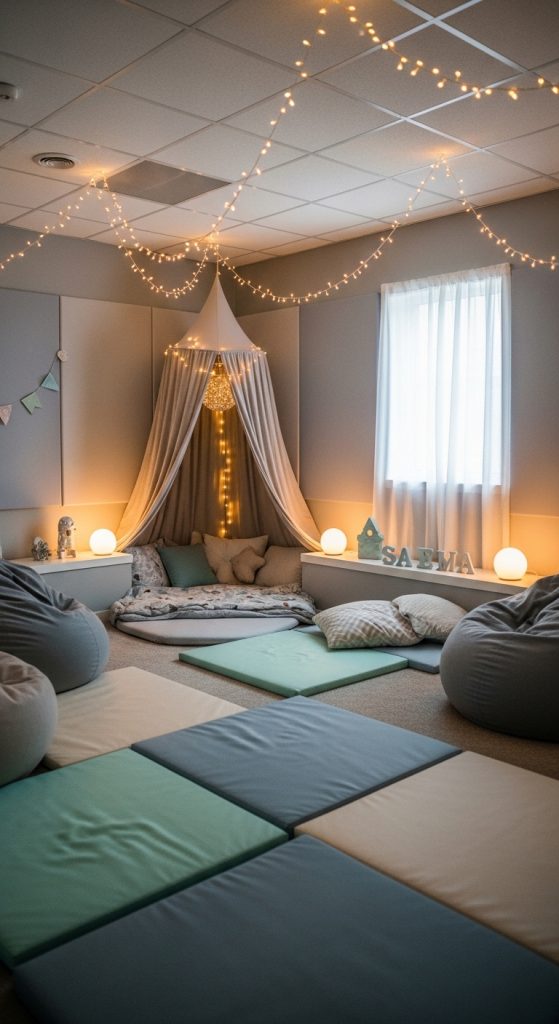
Soft lighting helps kids feel safe and relaxed. This idea focuses on gentle light sources that reduce stress and overstimulation.
Materials Needed:
- Warm fairy lights
- Soft LED lamps
- Light projector (stars or shapes)
- Curtains or dim covers
- Soft mats
Steps:
- Dim the main room lights
- Add warm fairy lights around walls
- Use a projector for calming visuals
- Keep colors soft and neutral
- Create a cozy corner for rest
Pro Tip:
Avoid harsh white lighting—it can feel too intense for kids.
2. Textured Sensory Wall Area
A sensory wall helps kids explore different textures through touch, improving sensory awareness.
Materials Needed:
- Foam panels
- Fabric pieces (soft, rough, smooth)
- Velcro strips
- Buttons, beads, and felt
- Wall board or panel
Steps:
- Attach base panel to wall
- Add different textures in sections
- Let kids touch and explore freely
- Rotate materials occasionally
- Keep height kid-friendly
Pro Tip:
Include safe, washable materials for easy maintenance.

3. Indoor Sensory Swing Corner
Movement helps kids regulate emotions and improve focus. A swing corner is a great addition to any sensory room.
Materials Needed:
- Indoor swing or hammock chair
- Strong ceiling hook
- Soft cushions
- Safety mat
- Open space
Steps:
- Install swing securely
- Place soft mat underneath
- Add pillows for comfort
- Ensure safe swinging space
- Supervise use when needed
Pro Tip:
Slow swinging helps calm anxiety and stress.

4. Color Therapy Sensory Room
Colors can affect mood and behavior. This idea uses calming and stimulating colors intentionally.
Materials Needed:
- Colored LED lights
- Wall paints or decals
- Color-changing lamps
- Soft furniture
- Transparent decor items
Steps:
- Choose calming colors like blue and green
- Add bright colors in play zones
- Use LED lights for mood changes
- Separate calm and active areas
- Keep balance in design
Pro Tip:
Blue tones help with relaxation and focus.
5. Soft Play Sensory Floor Zone
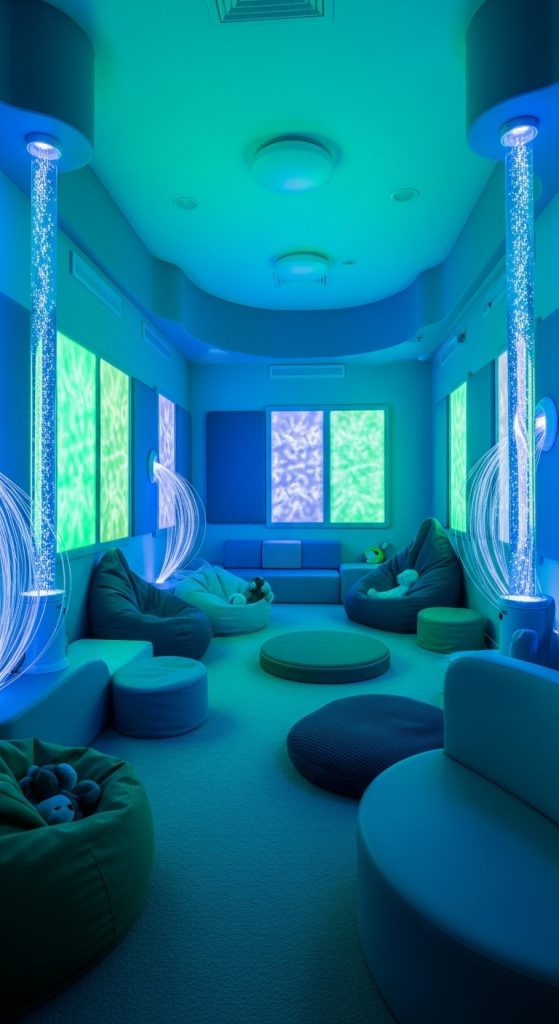
A soft floor area allows kids to move freely and safely while exploring sensory play.
Materials Needed:
- Foam floor mats
- Soft cushions
- Bean bags
- Sensory toys
- Soft rugs
Steps:
- Cover floor with soft mats
- Add cushions and bean bags
- Place toys in reachable areas
- Keep space open for movement
- Ensure safety padding
Pro Tip:
Rotate toys to keep kids engaged and curious.

6. Water & Bubble Sensory Station
Water play is calming and highly engaging for sensory development.
Materials Needed:
- Small water table or tub
- Plastic cups and scoops
- Bubble machine
- Floating toys
- Towels
Steps:
- Fill water table safely
- Add floating toys
- Include bubble activity
- Let kids explore textures
- Clean area after use
Pro Tip:
Supervise water play at all times for safety.

7. Music & Sound Sensory Corner
Sound helps children relax, focus, or energize depending on the type of audio.
Materials Needed:
- Bluetooth speaker
- Soft music playlist
- Musical toys
- Headphones (optional)
- Rhythm instruments
Steps:
- Create calming music playlist
- Add soft sound instruments
- Let kids explore rhythms
- Adjust volume for comfort
- Include silence time
Pro Tip:
Nature sounds work best for calming effects.

8. Nature-Inspired Sensory Room
Nature brings peace and grounding energy into a sensory space.
Materials Needed:
- Indoor plants
- Wooden decor
- Nature posters
- Soft green rugs
- Natural light access
Steps:
- Add plants around room
- Use earthy tones in decor
- Place nature-themed visuals
- Keep space airy and open
- Encourage outdoor connection
Pro Tip:
Real plants improve air quality and mood.

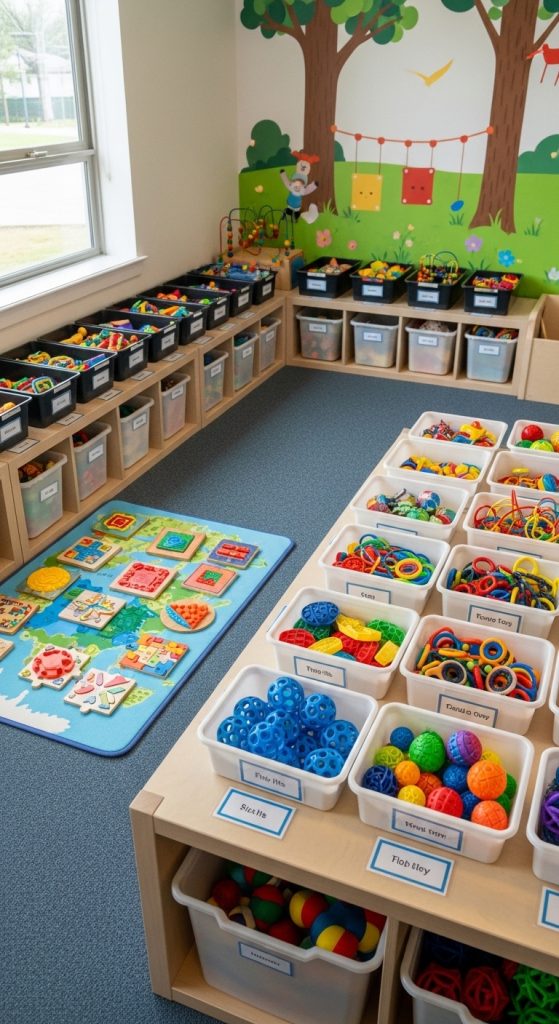
9. Interactive Sensory Toy Zone
Hands-on toys help kids improve coordination and focus while having fun.
Materials Needed:
- Fidget toys
- Building blocks
- Shape sorters
- Sensory balls
- Puzzle sets
Steps:
- Organize toys in bins
- Label storage clearly
- Rotate toys weekly
- Create easy access zones
- Keep items safe and clean
Pro Tip:
Too many toys can overwhelm—keep it simple.
10. Cozy Calm Down Sensory Tent
A quiet tent space gives kids a private area to relax and reset.
Materials Needed:
- Small indoor tent
- Soft pillows and blankets
- Fairy lights
- Weighted blanket
- Quiet toys
Steps:
- Set up tent in quiet corner
- Add soft lighting inside
- Include comfort items
- Keep space peaceful
- Encourage quiet time use
Pro Tip:
This space helps kids self-regulate emotions.

Tips & Tricks for Sensory Rooms for Kids
- Always balance stimulation and calm areas
- Use soft, safe materials only
- Keep lighting adjustable
- Rotate toys and activities often
- Design spaces based on the child’s needs
Common Mistakes to Avoid
- Overstimulating with too many lights or colors
- Using unsafe or hard materials
- Creating cluttered spaces
- Ignoring safety supervision
- Making the room too complex
Conclusion
These 10 Sensory Room For Kids Ideas are designed to help children feel calm, focused, and happy while supporting their sensory development. A well-designed sensory room can improve mood, reduce stress, and encourage learning through play.
You don’t need expensive equipment—just thoughtful design and simple materials can create a powerful space. Start with one idea and slowly build a sensory-friendly environment tailored to your child’s needs.




Leave a Reply