Sensory rooms use light, sound, touch, and movement to create a balanced experience. Some rooms feel calm and soothing, while others are more active and playful. In this guide, you’ll learn how to design both types easily using everyday items and creative setups.
Let’s explore these ideas and build a space where kids can learn, relax, and grow happily.
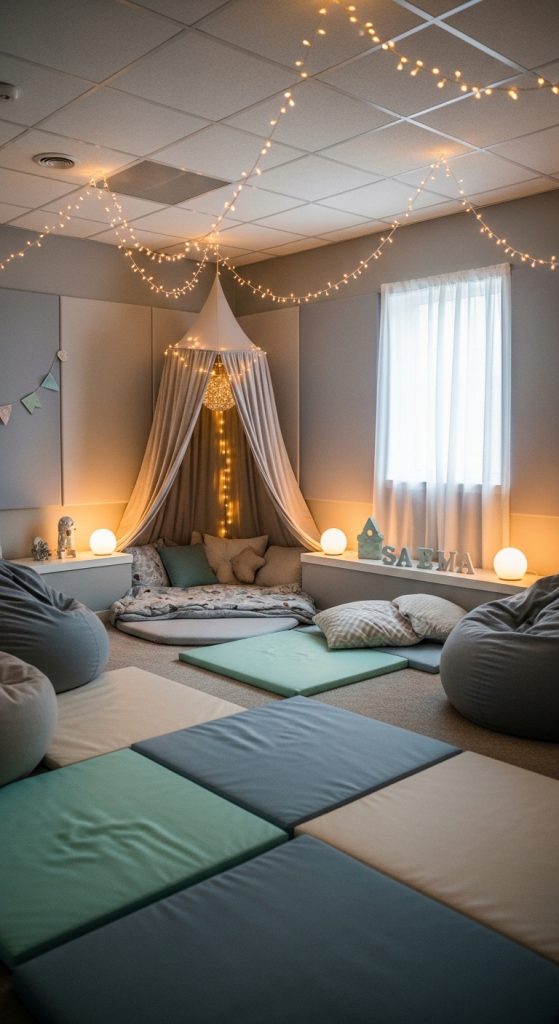
1. Soft Calming Light Sensory Room
Soft lighting helps kids feel safe and relaxed. This idea focuses on gentle light sources that reduce stress and overstimulation.
Materials Needed:
- Warm fairy lights
- Soft LED lamps
- Light projector (stars or shapes)
- Curtains or dim covers
- Soft mats
Steps:
- Dim the main room lights
- Add warm fairy lights around walls
- Use a projector for calming visuals
- Keep colors soft and neutral
- Create a cozy corner for rest
Pro Tip:
Avoid harsh white lighting—it can feel too intense for kids.
2. Textured Sensory Wall Area
A sensory wall helps kids explore different textures through touch, improving sensory awareness.