10. Dried and Preserved Floral Arrangements
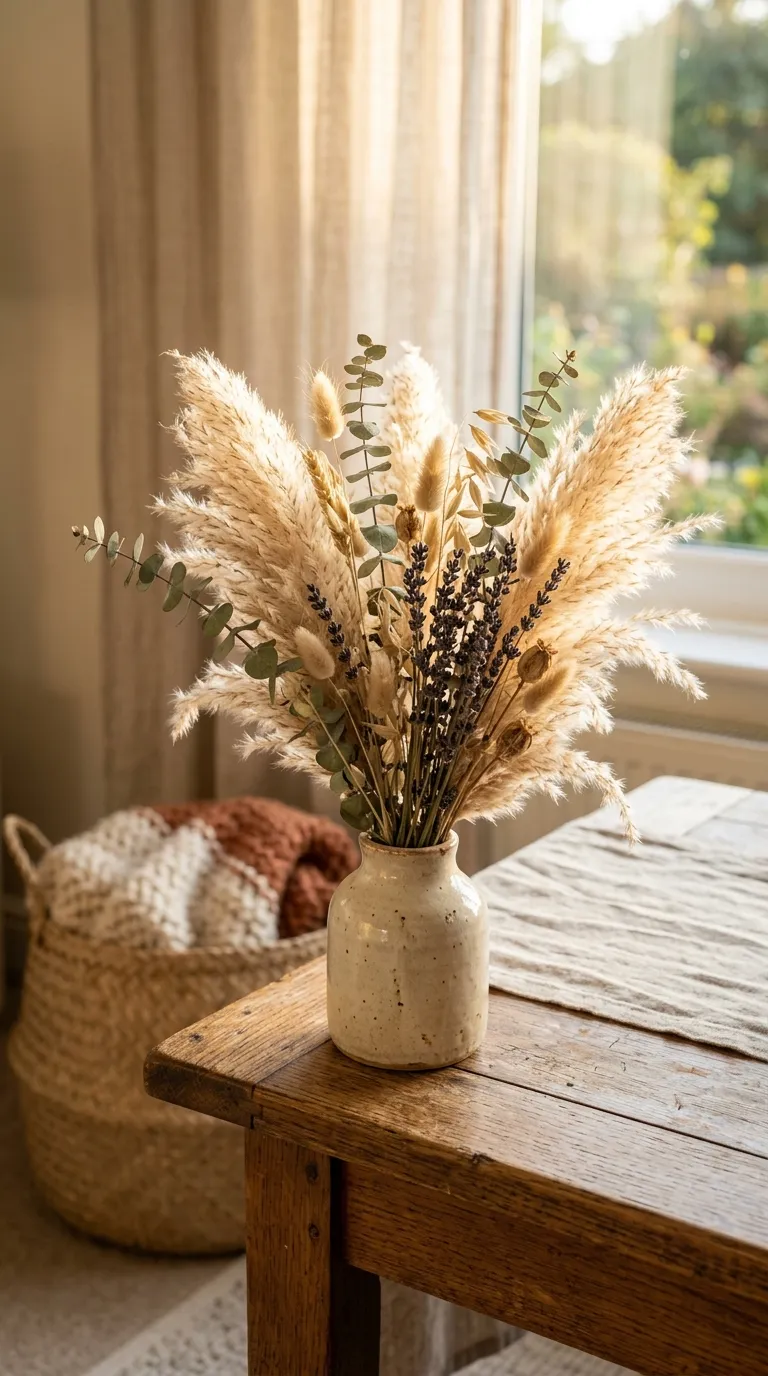
Dried flower arrangements have made a huge comeback, and they offer something fresh-cut bouquets can’t: longevity. A well-made dried arrangement can last for years, making it appealing for people who want lasting decor without the maintenance of live plants. The materials can be foraged, grown, or purchased in bulk from floral suppliers.
You’ll need dried flowers (lavender, eucalyptus, statice, baby’s breath, pampas grass, and strawflowers are popular), a vessel (ceramic vase, glass jar, woven basket, or wrapped foam ring), floral wire or hot glue, and sharp snips. Build your arrangement by starting with greenery as a base, then layering in focal flowers, fillers, and trailing elements for movement. Trim stems to varying lengths to create depth and visual interest.
A small arrangement takes about 45–90 minutes, depending on size and complexity. Difficulty is medium, mostly because composition is an art that improves with practice. Beginners often start with wreaths, simple bud vases, or hand-tied bundles before tackling larger designs.
Bundled bouquets wrapped in kraft paper and tied with twine are a lovely low-overhead option for markets. Hoop wreaths with dried florals sell consistently well, and preserved flower hoops can command premium prices during wedding season.
What is the easiest thing to make and sell from home?
Hand-poured candles and bath bombs are widely considered the easiest handmade items to start with. They use inexpensive materials, require minimal equipment, and have broad customer appeal. Both can be made in small batches in a kitchen, packaged simply, and sold at a healthy profit margin with very little upfront investment.
How much money can you realistically make from DIY crafts?
Earnings vary widely depending on what you make, how you price it, and where you sell. Many hobby sellers earn a few hundred dollars a month, while full-time craft business owners can bring in several thousand. The most consistent income comes from products that solve a problem, feel personal, or are purchased as gifts.
Where is the best place to sell handmade items?
Online marketplaces like Etsy, Amazon Handmade, and Shopify give you a built-in audience. Local craft fairs, farmers markets, and holiday bazaars are excellent for face-to-face sales. Many sellers also partner with boutiques on consignment, and a simple Instagram or TikTok account can help you build a loyal following without advertising costs.
Do I need a business license to sell crafts?
It depends on where you live and how much you earn. Most regions require a basic business license once sales reach a certain threshold, and you’ll likely need to collect sales tax in many areas. Check with your local government or small business association to find out the rules in your specific location.
What supplies should I buy first when starting out?
Start with the basics for one product rather than buying everything at once. For example, if you’re making candles, buy a small wax kit, a few jars, and a couple of fragrance oils. Test your process, refine your recipe, and only expand your inventory once you feel confident in your product. This prevents wasted materials and helps you find your signature style early on.
How do I price handmade items so I actually make a profit?
A common formula is to add up the cost of materials, multiply that by two to three, and then add an hourly rate for your time. Many sellers underprice their work, but remember that your skill, time, and creativity are part of the value. Don’t forget to factor in packaging, shipping supplies, and marketplace fees when calculating your numbers.
What handmade items sell best in the fall and winter?
Seasonal bestsellers include spiced candles, cinnamon-scented wax melts, cozy knitted accessories, dried floral wreaths, and rustic wooden signs with autumn or holiday themes. Gifts that feel warm, personal, and thoughtful tend to peak in demand from late October through December.
Starting with easy DIY projects to make and sell is one of the most rewarding ways to turn creative time into something tangible. You don’t have to commit to all ten of these ideas at once. In fact, the smartest approach is to pick one or two that genuinely excite you, make a few test batches, and get feedback from friends or local markets before scaling up. Each project you complete teaches you something new about materials, pricing, and what buyers respond to.
As you build your skills, let your personal style shine through. Maybe your candles lean toward clean and minimal, or your embroidery hoops are filled with wildflowers instead of geometric patterns. That personal touch is exactly what makes handmade items so meaningful to the people who buy them. So pick a project, gather your supplies, and enjoy the process. Your perfect first sale is closer than you think.