10. Galvanized Bucket Porch Arrangement
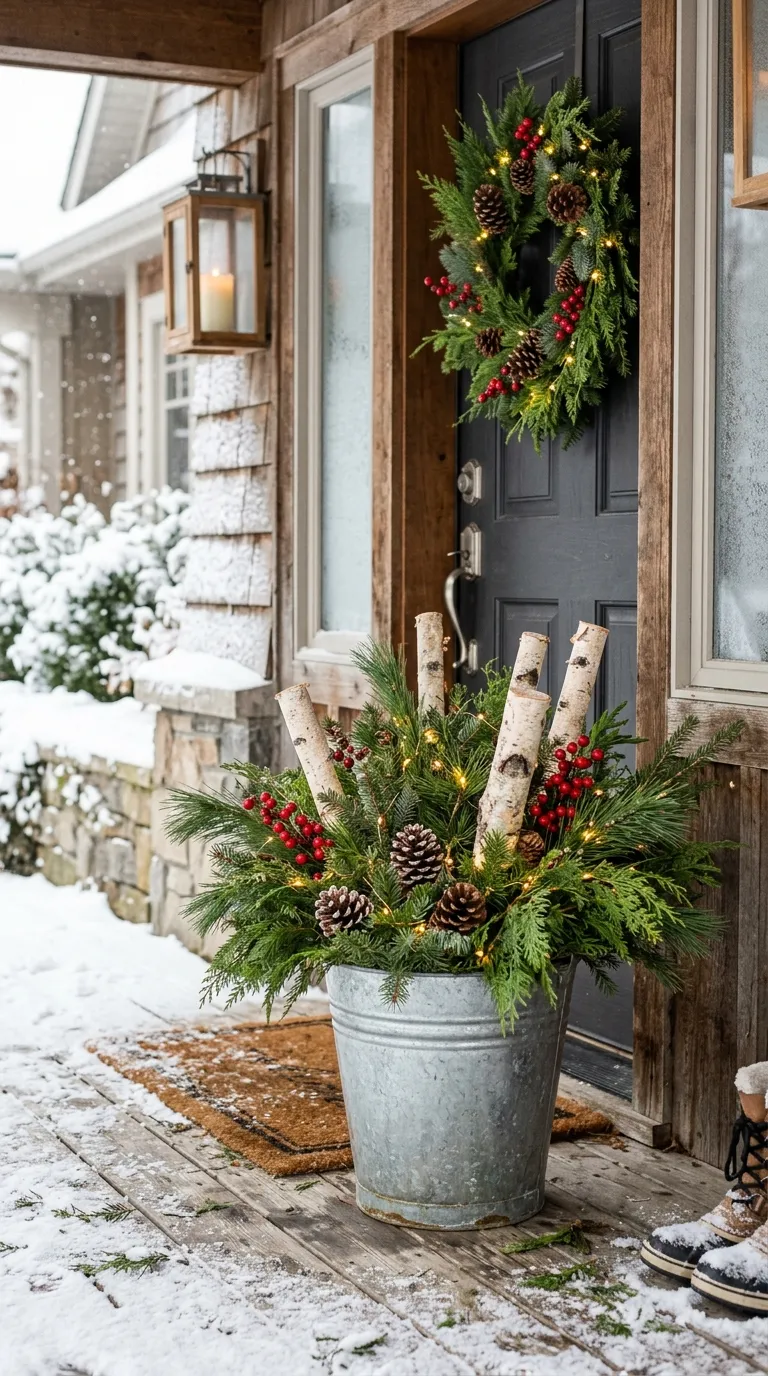
This is the project that makes a front door look intentional. Fill a galvanized bucket with floral foam or a crumpled chicken wire base, then push in evergreen clippings — cedar, fir, or pine — starting around the rim and working inward. Tuck in birch logs, pinecones, faux berries, and a few tall branches for height.
Add battery-operated fairy lights wound through the greens, and secure everything with floral wire so winter wind does not undo your work. If you are using real foam, soak it first and top it up with water every few days so the greenery stays fresh longer.
💡 Pro Tip: Set the bucket on a small brick or a piece of slate to keep it off wet concrete, and use a plastic liner inside if your bucket is not watertight.
Time: 30 to 40 minutes. Difficulty: easy. One arrangement beside the door is plenty; two matching buckets flanking the steps look especially welcoming.
Frequently Asked Questions
What supplies should I keep on hand for making Christmas decorations at home?
A basic kit covers most projects: a hot glue gun and glue sticks, jute twine, ribbon in a couple of widths, craft glue, sharp scissors, a needle, Mod Podge or matte sealer, and a neutral yarn. Add salt, flour, and cinnamon sticks from the pantry, plus a bag of felt balls and some wood slices if you want to be ready for a spontaneous craft afternoon.
How do I store handmade decorations so they last for years?
Wrap fragile items like salt dough ornaments and snow globes individually in tissue or bubble wrap, and store them in a rigid box rather than a soft bin that can crush them. Keep dried citrus garlands in a paper bag in a dry spot away from humidity, and coil yarn wreaths loosely with nothing resting on top of them. Label the boxes; you will thank yourself next December.
Which of these projects are suitable for young children?
Salt dough ornaments, wine cork reindeer, and paper stars are the most kid-friendly because they involve pressing, gluing, and folding rather than heat or sharp tools. Let kids handle the decorating while an adult manages the oven, the drill, and the hot glue gun.
How can I make DIY Christmas decorations on a tight budget?
Lean on materials you already own. Jars, corks, cardboard, old books, and fabric scraps cover several projects on this list. Buy greenery clippings from a tree lot or trim your own shrubs, and check thrift stores for candle holders, wreath forms, and ribbon spools at a fraction of retail cost.
How far in advance should I start making decorations?
Anything that needs drying time — salt dough, dried citrus, painted wood — is best started two to three weeks before you plan to decorate. Quick projects like the cinnamon wraps, cork reindeer, and paper stars can be done a day or two ahead. Fresh evergreen arrangements should be made no more than a week before guests arrive so they stay lush.
What is the best way to hang decorations without damaging walls?
Command hooks and adhesive strips work well for lightweight wreaths and garlands on painted surfaces. For heavier pieces, use a small nail in a stud or a picture hanger rated for the weight. Ribbon loops and fishing line are great for hanging ornaments from curtain rods, shelf edges, and light fixtures without any holes at all.
Final Thoughts
Decorating for the holidays does not have to mean a cart full of plastic packaging and a matching set of everything. A few evenings with simple materials can fill your home with pieces that feel personal — and the process itself is half the fun. Start with one project that fits the time you have, whether that is a ten-minute cork reindeer or a slow afternoon of wrapping yarn around a wreath form.
Then make it yours. Swap the palette, add a name, use the fabric you already love, or size a project down for a small apartment. The decorations you build yourself are the ones that become traditions, pulled out of the box each year with a story attached.